Popular: L Hamilton |
J Button


© Sutton Images
Enlarge
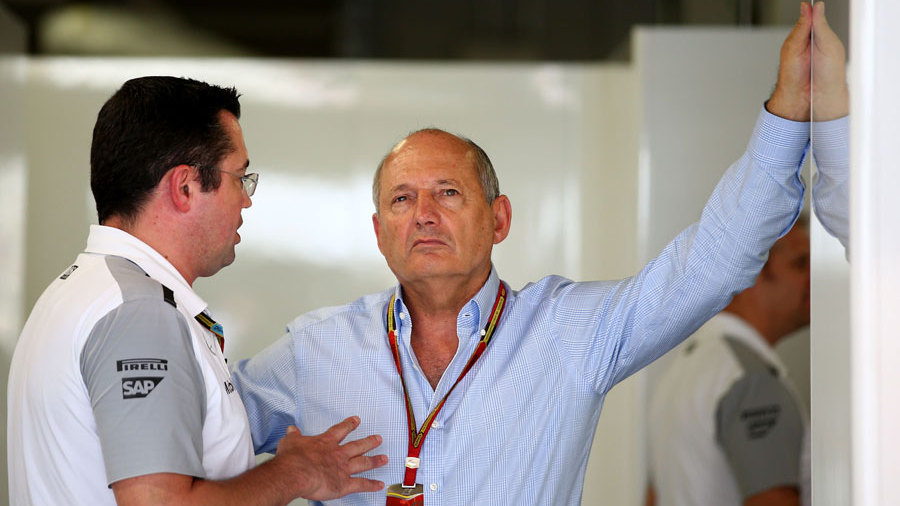
Ron Dennis' campaign to secure majority control of McLaren is gathering apace, with both Mumtalakat and [TAG boss] Mansour Ojjeh keen to press ahead with share purchase agreements signed last August.
The question that comes to mind, however, is why are McLaren's major investors willing to give up some or all of their stakes in both the race team and the wider McLaren Group?
My bank balance doesn't allow me scope to play around with multi-million or billion dollar investments, but what I learned at school was that investors exist to make money. Were it any other way, they would probably be known as patrons.
Given that investors are essentially looking for a safe house for their money which will also deliver a healthy return in the form of profits, they tend not to sell up unless their initial objectives are no longer being met. Perhaps the investment has been squeezed for its maximum return and there are greater - safer? - profits to be made elsewhere. Maybe the investment has been determined to no longer be the Fort Knox it once was, or maybe it's simply no longer profitable.
It may be the case that Mumtalakat have determined on a board level that there is little more benefit to be had from having the majority stake in the McLaren Group. Through their McLaren relationship the Bahraini sovereign wealth fund has received international exposure, while its representatives - working on behalf of the Bahraini people - have made swathes of international business contacts and become aware of new opportunities. What more can be gained?

McLaren has not won a race since the 2012 finale © Press Association
Enlarge
The CVC model is an example of this: the investment firm so inextricably linked with modern F1 traditionally puts a time limit of around seven years on its investments, using the time to make maximum returns for their own investors before moving on to the next area of interest. Arriving with an exit strategy already lined up is one way these companies make their money.
Mumtalakat first invested in the McLaren Group with a 30% stake in 2007, growing to their current 50% stake by the end of 2011 when Daimler's 40% stake was divided between the Bahraini wealth fund, Mansour Ojjeh, and Ron Dennis. For them to look at reducing their stake now fits in with the typical investment model, and it is telling that Mumtalakat are - according to reports - divesting their majority stake and not selling up wholesale.
After a few lean years on track, with only two podium finishes from the last two seasons, the McLaren F1 team may not look like the best of investments. But when was a race team an excellent way to make money? As the saying goes, the best way to make a small fortune in motorsport is to start with a large one.
What makes McLaren so special is that the race team is only the tip of the investment iceberg. In depth technical partnerships with non-F1 brands - such as GlaxoSmithKline, for example - have seen the McLaren Group become a recognised world leader in business solutions, in data management and simulation, (all via McLaren Applied Technologies) and in motorsport supply (McLaren Electronic Systems). McLaren Automotive is a separate entity.
For anyone - private individual or corporate entity - hoping to profit from a connection with motorsport, McLaren is the class leader when it comes to developing and improving technologies with real world applications and real world profits.
So why relinquish any piece of a potentially profitable pie? Your guess is as good as mine...
© ESPN Sports Media Ltd.
 Feeds: Kate Walker

WRITER BIO
Kate Walker is the editor of GP Week magazine and a freelance contributor to ESPN. A member of the F1 travelling circus since 2010, her unique approach to Formula One coverage has been described as 'a collection of culinary reviews and food pictures from exotic locales that just happen to be playing host to a grand prix'.
RECENT POSTS
Kate Walker

Kate Walker is the editor of GP Week magazine and a freelance contributor to ESPN. A member of the F1 travelling circus since 2010, her unique approach to Formula One coverage has been described as 'a collection of culinary reviews and food pictures from exotic locales that just happen to be playing host to a grand prix'.

